
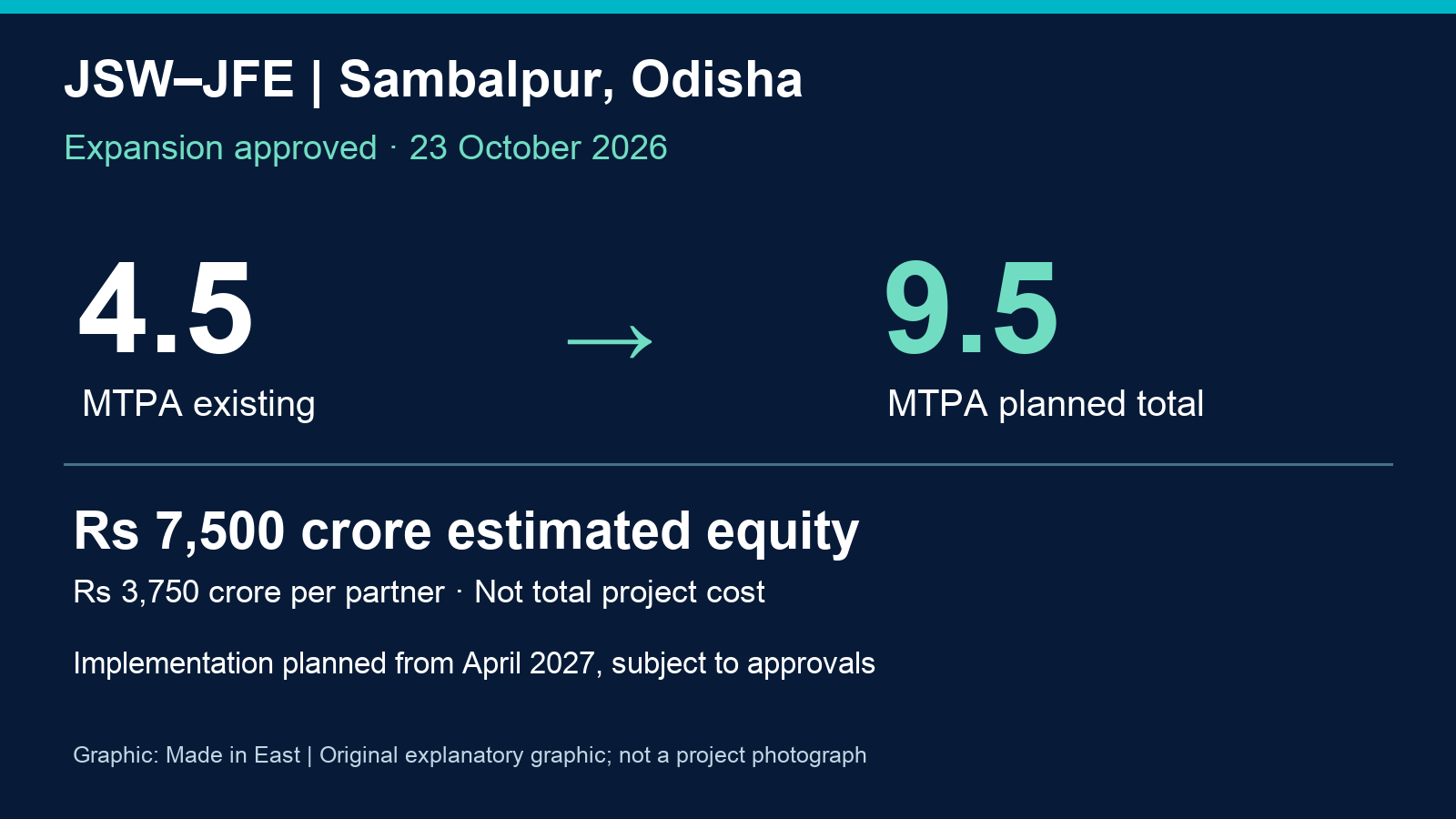
JSW Steel and JFE Steel have approved an expansion of their Sambalpur steelworks in Odisha, adding a planned 5 million tonnes a year to an existing 4.5-million-tonne plant. The decision was disclosed on 23 October.
The useful distinction is the step being taken. A defined expansion has received board approval; the additional capacity is not yet producing steel.
What happened
JSW’s stock-exchange intimation puts the estimated equity requirement at ₹7,500 crore, shared equally between the two partners. Each would contribute ₹3,750 crore. This is an equity-funding estimate, rather than a disclosed total project cost or evidence that the money has already been spent.
Implementation is expected from April 2027, subject to statutory and environmental approvals, with approximately three and a half years targeted for completion. JFE separately gives calendar 2030 as the planned start-up year and puts expanded capacity at 9.5 million tonnes annually.
JFE’s equipment outline includes a blast furnace, coke ovens, a pellet plant, converters, continuous casters, a hot-strip mill and utilities. These are planned additions to an integrated works, not separate operating assets announced today.
Why it matters
For readers following Odisha’s steel industry, this decision provides a more specific execution checkpoint than a broad partnership or investment ambition. It identifies the additional capacity, a proposed equity split and a conditional implementation timetable.
The financing language matters. Equity is one part of how a project may be funded; equating it with total capital expenditure would give readers an inaccurate basis for comparing this expansion with other steel investments. The disclosure does not establish total project spending or a completed financing package.
This is also a different project from JSW Utkal’s Paradip development, where MIE recently covered a sinter-plant equipment award. Sambalpur’s crude-steel expansion and Paradip’s sinter capacity should not be added together as though they measure the same process.
Watch next
The next useful evidence will be the necessary clearances, confirmation of funding arrangements and a disclosed start of implementation. Equipment awards and construction progress would provide later checkpoints. None should be inferred from the board decision alone.
MIE will track those stages separately. A future start-up target should remain a target until the company reports commissioning and the scope of what has entered service.
Sources and limits
The report draws on JSW Steel’s three-page 23 October filing and JFE Steel’s release of the same date. Both are interested-party disclosures. They establish the announced decision and timetable; MIE has not independently observed construction or verified expenditure.